
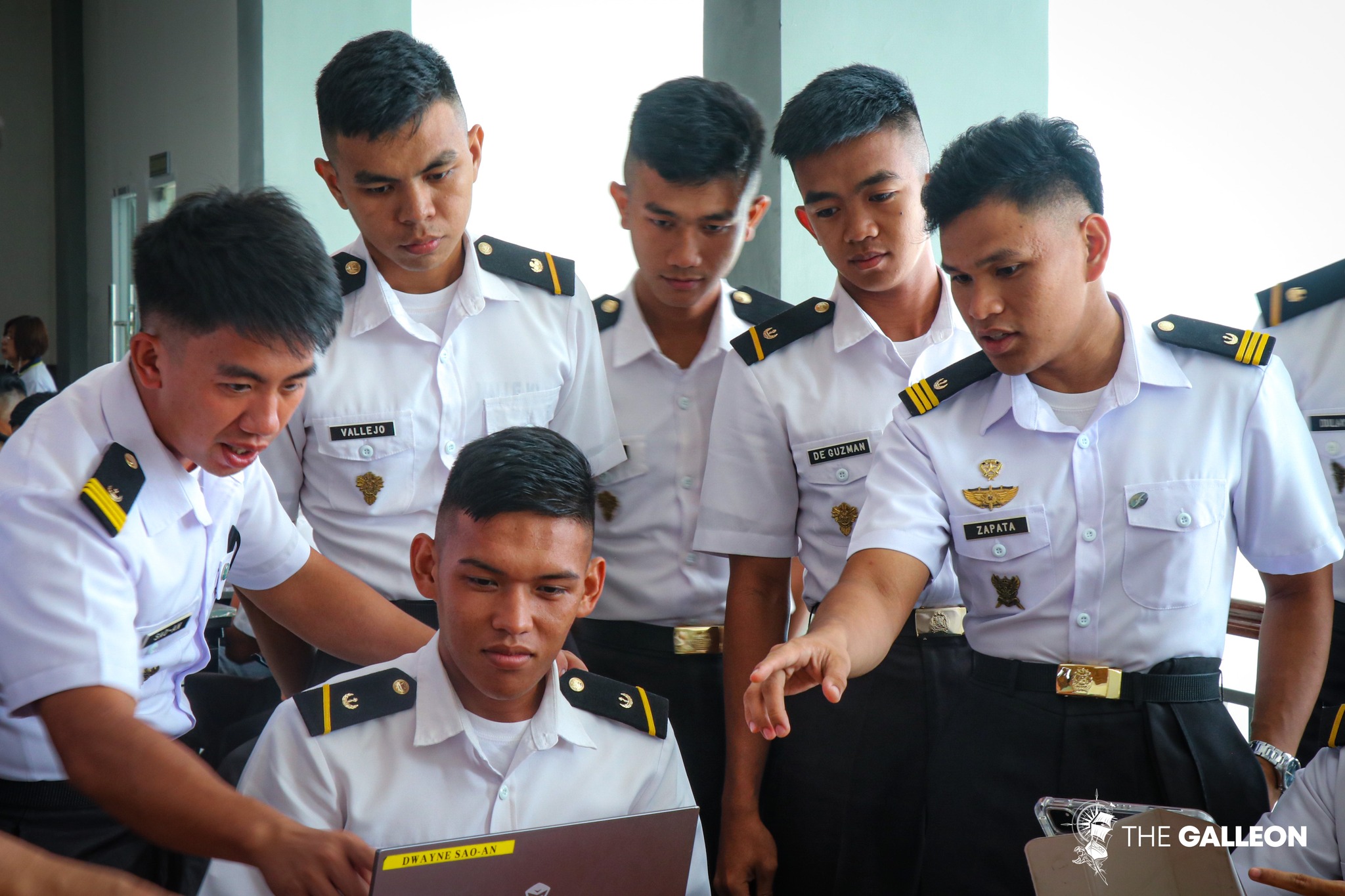
THE FILIPINO SEAFARER:
A MARITIME OVERVIEW FOR PMMA GEN2K
Deployment, Demographics, Economic Impact, Strategic Defense Role,
Maritime Education Infrastructure & Institutional Analysis
By: Renel C. Ramos
For: PMMA Gen2K
With Special Reference to the Philippine Merchant Marine Academy (PMMA)
as the Premier Quasi-Military Maritime Institution and the Executive Trinity Framework
(Stephen Bungay, The Art of Action, 2011)
Data Sources: Department of Migrant Workers (DMW), Maritime Industry Authority (MARINA),
Commission on Higher Education (CHED), Philippine Statistics Authority (PSA),
UA&P Center for Research & Communication / ALMA Maritime Group, PJMCC, BIMCO/ICS

PART I: THE FILIPINO SEAFARER — DEPLOYMENT, DEMOGRAPHICS & ECONOMIC IMPACT
1. Deployment Trends (2016–2024)
The Philippines is the world’s largest supplier of seafarers, with Filipinos comprising approximately 25% of the 1.6 million global seafarer workforce and manning roughly 30% of the world’s merchant fleet. The Department of Migrant Workers (DMW) reports the following deployment trajectory:

2. Regional Distribution of Deployed Seafarers
Based on DMW 2023 deployment data and PSA regional surveys, the following table presents the estimated geographic origin of deployed Filipino seafarers by administrative region:

3. Seafarer Demographics

4. Economic Impact
A landmark 2025 study by the UA&P Center for Research and Communication and ALMA Maritime Group quantified the full economic footprint of the Philippine seafaring industry:
 Legislative Framework: Republic Act 12021, the Magna Carta of Filipino Seafarers, was signed into law on September 23, 2024. It consolidates seafarer rights, welfare, and dispute resolution under a single comprehensive statute, reinforcing the Philippines’ institutional commitment to its seafarer workforce.
PART II: THE MERCHANT MARINE AS A NATIONAL STRATEGIC RESOURCE
The Fourth Arm of Defense: Filipino Seafarers in Times of Peace and in Times of War
5. The Strategic Imperative: 576,600 Seafarers as a National Resource
The 576,600 Filipino seafarers deployed globally in 2023 are far more than an economic workforce—they constitute a national strategic resource of the first order. President Franklin D. Roosevelt famously called the merchant marine the “Fourth Arm of Defense” alongside the Army, Navy, and Air Force—recognizing that a nation’s commercial maritime capability is inseparable from its capacity to project power, sustain military operations, and defend its sovereignty. For the Philippines—an archipelagic nation of 7,641 islands whose territorial waters and Exclusive Economic Zone encompass approximately 2.2 million square kilometers—this doctrine carries existential weight.
The Philippines possesses the world’s largest pool of trained, experienced, internationally certified merchant mariners. This is not an incidental statistic. It is a strategic asset that serves the nation in two fundamental capacities: as the engine of economic prosperity in peacetime, and as the indispensable foundation of maritime defense in times of war or national emergency.
5.1 In Times of Peace: The Economic Engine
In peacetime, the Filipino merchant marine performs functions that are vital to the nation’s economic survival and global standing:

5.2 In Times of War: The Fourth Arm of Defense
History demonstrates unequivocally that no nation can sustain military operations without its merchant marine. During World War II, the U.S. Merchant Marine delivered over 90% of all war materiel—without which no army could have fought and no navy could have been sustained at sea. President Roosevelt’s designation of the merchant marine as the “Fourth Arm of Defense” was not rhetoric; it was operational reality. The same principle applies to the Philippines with particular urgency in the contemporary strategic environment:

5.3 The West Philippine Sea Context: Why This Matters Now
The strategic significance of the Filipino merchant marine is not abstract. It is immediate and urgent. The West Philippine Sea—part of the South China Sea within the Philippines’ Exclusive Economic Zone—is the arena where peacetime and wartime maritime roles converge:
• Sovereignty and Territorial Integrity: The 2016 Permanent Court of Arbitration ruling affirmed Philippine sovereign rights in the West Philippine Sea. Maintaining a trained maritime workforce capable of operating in contested waters is essential to exercising those rights.
• Sea Lane Security: Approximately one-third of global shipping transits the South China Sea. Filipino seafarers crew a significant portion of these vessels. Their professional competence and presence on international vessels is itself a form of strategic engagement.
• Energy Security: The Malampaya gas field—located in the West Philippine Sea—supplies approximately 20% of Luzon’s energy. Offshore energy operations require trained maritime personnel for platform supply, emergency response, and logistics support.
• Food Security: Filipino fishermen—many from maritime communities that also produce seafarers—depend on West Philippine Sea fishing grounds that contribute 7.2% of the country’s fisheries production. Maritime capability underpins both economic and food security.
• AFP Modernization: The Revised AFP Modernization Program (Horizon 3, 2023–2028) prioritizes naval capability—frigates, corvettes, offshore patrol vessels, strategic sealift vessels, and unmanned systems. All require trained maritime personnel to operate, maintain, and sustain.
5.4 PMMA: The Institutional Bridge Between Peace and War
It is in this strategic context that the PMMA’s unique dual-commission model assumes its full significance. PMMA is the only Philippine maritime institution that simultaneously produces merchant marine officers for peacetime commercial service and commissioned naval reserve officers for wartime defense. This is not a coincidence of institutional design—it is the academy’s founding mandate under RA 3680: to serve both the nation’s economic development through international trade and its territorial defense through a trained naval auxiliary.
The values of Kababaang-loob, Kawastuhan, and Kagitingan are not merely personal virtues—they are national security assets. A Master Mariner who serves with humility, a Chief Engineer who acts with righteousness, an officer who leads with courage—each is equally valuable on a container ship transiting the Strait of Malacca in peacetime and on a naval auxiliary vessel resupplying forces in the West Philippine Sea during a crisis. The Executive Trinity—Directing, Managing, Leading—applies identically in both contexts, on the bridge and in the engine room. This is the strategic genius of the PMMA model: it produces officers who need not be retrained or reoriented when the nation’s needs shift from commerce to defense.

The Filipino seafarer is not merely an overseas worker sending remittances home. The Filipino seafarer is a strategic national resource—an instrument of economic power in peace and a pillar of national defense in war. Any policy framework that treats maritime education and seafarer development as a mere labor export program fundamentally misunderstands the dual role of the merchant marine. The Philippines’ 576,600 deployed seafarers are, in Roosevelt’s enduring formulation, the nation’s Fourth Arm of Defense.
PART III: MARITIME EDUCATION INFRASTRUCTURE
6. Maritime Higher Education Institutions (MHEIs)
As of May 2025, MARINA and CHED recognize 83 MHEIs authorized to offer BSMT and/or BSMarE programs: 75 private institutions and 8 State Universities and Colleges (SUCs). 78 offer BSMT; 69 offer BSMarE. Approximately 280,000 students graduate from maritime programs annually, though only an estimated 3% secure immediate onboard employment.
6.1 Regional Distribution of Maritime Schools

PART IV: THE PMMA DISTINCTION 2014 THE PREMIER MARITIME INSTITUTION
The Premier Maritime Institution: A Quasi-Military Academy in a Class of Its Own
7. Institutional Identity: The Premier Institution 2014 Not a School — An Academy
Established in 1820 as the Escuela Náutica de Manila under Spanish Royal Decree, the Philippine Merchant Marine Academy is the oldest maritime institution in Asia and one of the oldest in the world. PMMA is not a maritime school in the conventional sense2014it is the country2019s premier maritime institution and—it is the nation’s sole government-operated, quasi-military maritime academy, with a fundamentally different curriculum, training philosophy, and institutional mandate. Comparing PMMA to civilian maritime schools is a categorical error, akin to comparing a military academy to a civilian university.
PMMA midshipmen are government scholars under a quasi-military regimen—housed inside the academy compound 24/7, under constant discipline and leadership development. Every aspect of daily life is structured to forge command-grade officers—whether through the Bachelor of Science in Marine Transportation (BSMT) for future Master Mariners or the Bachelor of Science in Marine Engineering (BSMarE) for future Chief Engineers. Only ~5% of approximately 6,400 annual applicants survive the screening process. Upon graduation, midshipmen are commissioned as Ensigns in the Philippine Navy Reserve with 100% employment rates.
7.1 The Enduring Values: Kababaang-loob, Kawastuhan, Kagitingan
For over two centuries, PMMA has anchored its formation on three core values that constitute the moral compass of every midshipman: Kababaang-loob (Humility), Kawastuhan (Righteousness), and Kagitingan (Courage). These are not slogans adopted for institutional branding. They are living principles that have governed the conduct of the academy’s midshipmen since the Escuela Náutica de Manila first opened its doors in 1820—making them among the oldest continuously practiced institutional values in Philippine education.

These three values form an inseparable triad. Kababaang-loob without Kagitingan produces passivity; Kagitingan without Kawastuhan produces recklessness; Kawastuhan without Kababaang-loob produces self-righteousness. Together, they forge the complete maritime officer—whether destined for the bridge as Master Mariner or the engine room as Chief Engineer—one who serves with humility, acts with integrity, and leads with courage. This values-driven formation is what has sustained PMMA for over 200 years through Spanish colonial rule, revolution, American occupation, Japanese invasion, and the modern era of global shipping. The values endure because they are timeless—as relevant to a midshipman commanding a watch in 2026 as they were to Captain Ledesma commanding a revolution in 1898.
PMMA, MAAP & Civilian Maritime Schools: A Comparative Framework

Note on MAAP: The Maritime Academy of Asia and the Pacific, founded in 1998 by PMMA alumnus Captain Gregorio S. Oca through AMOSUP, occupies a unique position in the Philippine maritime education landscape. While legally a private civilian institution, MAAP operates with a level of residential discipline, structured formation, and guaranteed employment that sets it apart from other civilian schools. Its curriculum is under CHED, and its governance includes international shipowner associations from Denmark, Norway, and Japan. MAAP is, in effect, a hybrid—civilian in legal status but quasi-military in operational culture—reflecting the PMMA values of its founder.
8. The Command Advantage: Stephen Bungay’s Executive Trinity
Stephen Bungay, in The Art of Action (2011), identifies three interconnected elements—the Executive Trinity—that constitute what effective leaders actually do. Drawing on the Prussian concept of Auftragstaktik (mission command), Bungay’s framework maps precisely onto the PMMA formation model—and is deeply reinforced by the academy’s centuries-old core values of Kababaang-loob, Kawastuhan, and Kagitingan:
Element Domain Core Duty PMMA Application

The Command Dimension: Civilian schools can teach managing (technical operations) and elements of leading (teamwork). But the authority and weight of command—the capacity to direct with clarity of intent under uncertainty, friction, and danger—can only be developed through sustained immersion in a command environment. This is precisely what the PMMA’s quasi-military structure provides. The Corps of Midshipmen is a functioning chain of command where orders have real consequences and the midshipman learns directed opportunism—Bungay’s term for carrying out a commander’s intent while adapting to changing circumstances.
9. Notable PMMA Alumni: Command Leadership Across Centuries

These alumni—spanning from the Spanish colonial era to the present day—illustrate a consistent pattern: the values-driven, command-based formation of the PMMA (and its predecessor institutions) produces leaders who operate at the highest levels of national and international affairs. From Captain Ledesma’s Kagitingan in revolution to Captain Oca’s Kababaang-loob in service to seafarers, from Azcárraga’s Kawastuhan in statecraft to the Razon dynasty’s maritime legacy in global commerce—the enduring values of Humility, Righteousness, and Courage continue to shape leaders who serve the Philippines and the world.
PART V: MARKET SHARE ANALYSIS & KEY OBSERVATIONS
10. Tiered Market Structure
 11. Key Observations
• The Command Gap: PMMA is the only institution where the full Executive Trinity is practiced daily as a lived reality, anchored in centuries-old values of Kababaang-loob, Kawastuhan, and Kagitingan. This produces officers with inherent command authority and moral conviction that civilian graduates must develop over years at sea.
• Quality vs. Volume: Industry-backed academies (MAAP, NYK-TDG, MMMA) limit enrollment to 300–500/year for quality; large schools process thousands with lower placement rates.
• Geographic Concentration: Top schools cluster in CALABARZON/Central Luzon, Iloilo/Bacolod, and Cebu. Mindanao and Northern Luzon remain underserved.
• Cadetship Bottleneck: ~280,000 graduates vs. ~3% job availability. PMMA, MAAP and other industry-backed schools with guaranteed employment hold decisive advantages.
• EMSA Compliance: European audits have intensified quality scrutiny, resulting in phased-out programs at underperforming schools.
• Economic Multiplier: Every peso remitted generates ~3 pesos in economic activity. The ₱1.06 trillion annual impact (4% GDP) makes seafaring a strategic national industry.
Reference: Stephen Bungay, The Art of Action (Nicholas Brealey Publishing, 2011)
Appendix A: Top Civilian Maritime Schools by 2024 MSAP Rankings
PMMA excluded — assessed separately as quasi-military academy (Part III).
 Appendix B: Complete Directory of 83 MARINA/CHED-Accredited MHEIs (May 2025)
*PMMA (No. 19) highlighted — included for completeness but assessed separately in Part III.


Leave A Comment